If you've been looking into occupational therapy for your child or yourself, you've probably come across the word "neuroaffirming". It shows up on clinic websites, in parent groups, and in conversations with paediatricians and teachers. But it isn't always clear what it actually changes about the support someone receives.
At Nesting Space, neuroaffirming practice sits at the centre of how we work with children, adults and families. It shapes everything from the goals we set to the way a session feels.
What Does Neuroaffirming Mean?
Neuroaffirming (sometimes written as neurodiversity-affirming) comes from the neurodiversity paradigm: the idea that natural variation in how human brains work is a normal part of being human. Autism, ADHD, dyslexia, dyspraxia and other neurodevelopmental differences are seen as different ways of thinking, sensing and experiencing the world, rather than broken versions of a "typical" brain.
That doesn't mean ignoring the very real challenges that can come with being neurodivergent. It means understanding those challenges in context. A lot of the difficulty comes from a mismatch between a person's needs and an environment that wasn't designed with them in mind: a loud classroom, a rigid workplace, or social rules that don't make sense.
A neuroaffirming occupational therapist works with a person's neurotype, not against it. The aim is to support wellbeing, participation and self-understanding, not to make someone appear more neurotypical.
How Is It Different From Traditional Approaches?
For a long time, many therapies for Autistic and ADHD children focused on changing visible behaviour. Success was often measured by how "typical" a child looked: making eye contact, sitting still, stopping repetitive movements, or following instructions straight away.
The trouble is that looking settled on the outside isn't the same as feeling safe on the inside. Many Autistic adults now describe the long-term cost of learning to hide who they are, often called masking or camouflaging, which has been linked with anxiety, exhaustion and burnout.
Neuroaffirming practice shifts the question from "how do we make this behaviour stop?" to "what is this behaviour telling us, and what does this person need?" In practice, that looks like:
Supporting communication that feels comfortable and works for the person, instead of teaching eye contact
Seeing stimming as a regulation tool and finding safe ways to use it, instead of trying to stop it
Understanding meltdowns and shutdowns as nervous system overwhelm, instead of treating them as bad behaviour
Changing the environment as well as building skills, instead of expecting the person to do all the adapting
Setting goals with the person, instead of for them
What Does Neuroaffirming OT Look Like in Practice?
Every session is different, but some things stay consistent.
Goals that matter to the person. We start with what the person (and for children, their family) actually wants to work on. A child might want to join in at lunchtime, cope with the drive to school, or sleep through the night. An adult might want to get through the work week without crashing by Friday.
Understanding the sensory profile. We get curious about what feels good, what feels overwhelming, and what helps the nervous system settle, then build that into daily routines.
Strengths first. Interests, passions and natural strengths are tools, not distractions. A child who loves dinosaurs might practise fine motor skills by building a dinosaur habitat.
Regulation before skills. Learning is hard when the nervous system is in survival mode, so safety and regulation come before anything else.
Respect for autonomy. We listen to "no", whether it's spoken, shown through body language, or communicated another way. Consent and trust come before progress.
Working alongside families and carers. For children, parents and carers are the experts on their child. We share strategies that fit real family life and help the adults around a child understand what's driving their behaviour.
Changing the environment, not just the person. Practical adjustments at home, school or work, like quiet spaces, visual supports, movement breaks or flexible routines, can make a bigger difference than any single skill.
What Neuroaffirming Doesn't Mean
Neuroaffirming practice is sometimes misunderstood as "anything goes" or never working on hard things. That isn't the case.
We still work on skills that make daily life easier and safer, such as toileting, sleep, eating, emotional regulation, getting ready for school or work, and managing transitions. The difference is in the how and the why. Skills are built because they help the person live the life they want, in a way that respects how their brain works, not so they can pass as neurotypical.
It also doesn't mean every neurodivergent person feels the same way about their identity. Some people prefer identity-first language ("Autistic person"), while others prefer person-first language ("person with autism"). We follow the lead of the person in front of us.

Neuroaffirming Support for Adults
Many adults reach a diagnosis later in life, sometimes after years of feeling different without knowing why. Others recognise themselves while supporting their own child through an assessment.
For adults, neuroaffirming OT might focus on recovering from burnout, reducing the energy cost of masking, understanding sensory needs, building routines that suit how your brain works, and setting up home and work in ways that feel sustainable. Our occupational therapists are also endorsed mental health clinicians, so we can support adults where neurodivergence sits alongside anxiety, low mood or ongoing stress.
Questions to Ask When Choosing a Neuroaffirming OT
The word "neuroaffirming" is used widely, so it's completely fine to ask a few questions before you book:
How do you set goals, and who decides what they are?
How do you respond to stimming, meltdowns or shutdowns?
How do you involve parents, carers or partners?
What does consent look like in your sessions, especially with children?
How do you adapt the environment, not just the person?
A good therapist will be happy to talk through their approach and won't mind being asked.
How Nesting Space Can Help
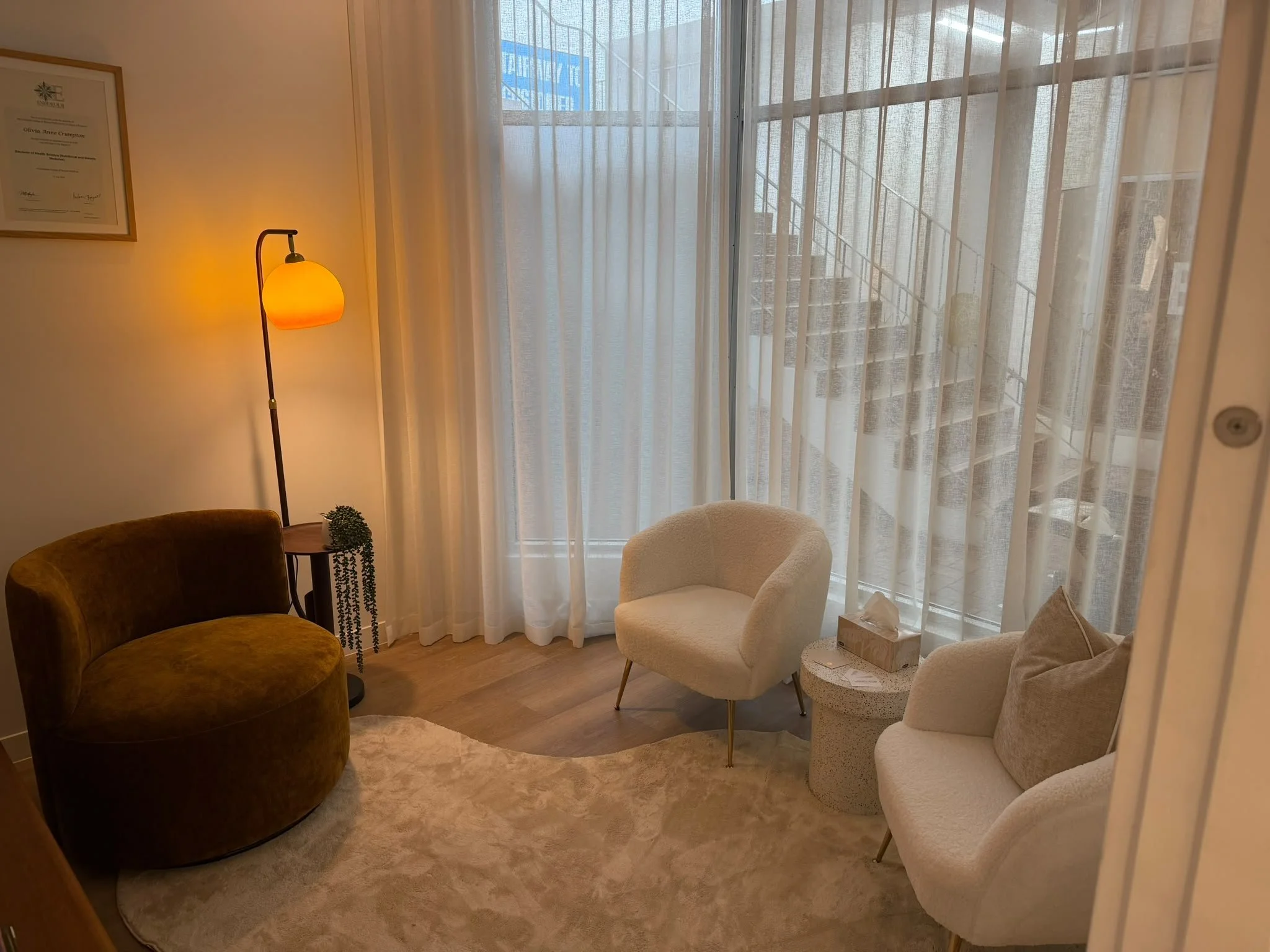
We're a perinatal, occupational, and family mental health practice based in Freshwater, right in the heart of Sydney's Northern Beaches. Our team offers paediatric occupational therapy and adult mental health occupational therapy, and every part of our work is collaborative, neuroaffirming, and trauma-informed.
We're not just clinicians, we're your neighbours. Whether you're exploring support for your child, wondering about your own neurodivergence, or simply looking for a therapist who will meet you where you are, that's a completely normal place to start.
Get in touch with our Northern Beaches team, or have a chat to your GP about a referral, and we'll talk you through what support could look like for you or your family.
Frequently Asked Questions
-
No. It's relevant for anyone who is neurodivergent, including people with ADHD, dyslexia, dyspraxia and other differences. Many of its principles, like respecting autonomy, working with strengths and adjusting environments, benefit everyone.
-
Yes. Rather than focusing only on stopping a behaviour, we work on understanding what's driving it, such as sensory overload, anxiety, unmet needs or communication differences, and support the person and the people around them from there.
-
No. You can see an occupational therapist privately without a diagnosis. A diagnosis can open up funding options through Medicare or the NDIS, so it's worth talking to your GP about what applies to you.
-
Neuroaffirming practice is an approach and a set of values rather than a single therapy program. It draws on evidence-based occupational therapy strategies and growing research into masking, burnout and wellbeing, alongside the lived experience of neurodivergent people.
-
Nesting Space's clinic is based in Freshwater and works with children, adults and families across Sydney's Northern Beaches. Reach out to our team to find out whether we're the right fit for you.